Chapter 11

[EN]
"You can't compete with someone who is just doing what they love" – Part 2
◼️A girl who was born and raised in a Portuguese household, with African roots, an "Asian mindset" and British fundamental education. How much more complex could it get? You are in for a ride...
Music was my very first language;
Portuguese & English were my 2nd;
Dance was my 3rd.
How can dance be relevant for personal development and care? I shall share with you my findings in a minute.
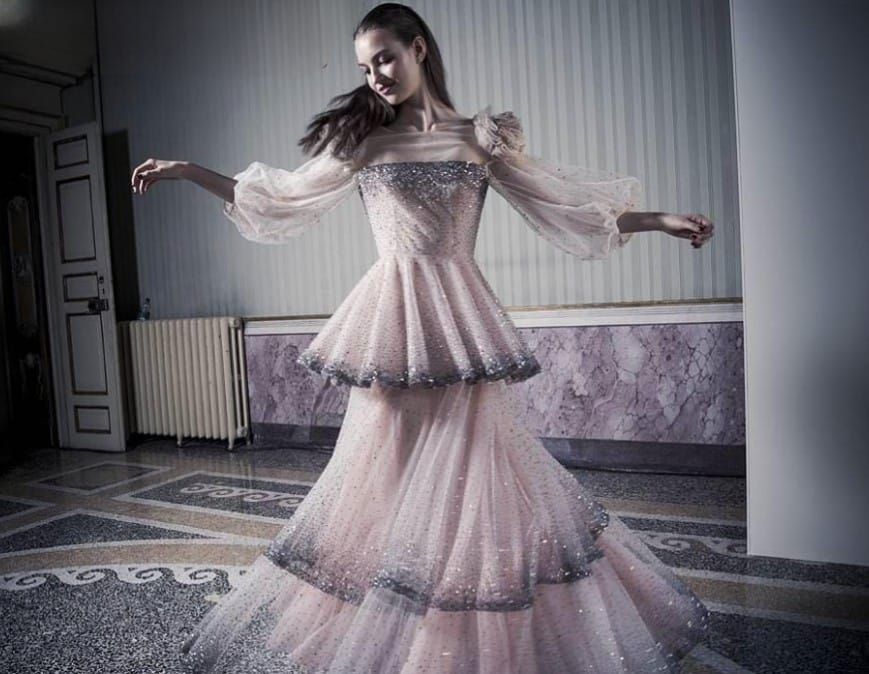
But first, the Portuguese Golden Globes have just passed and as Lisbon Fashion Week “ModaLisboa” & "Portugal Fashion" are fast approaching, I was reminded of my very first runway audition, which possibly to the surprise of a few of you... I failed.
The casting process for events of that magnitude generally occur a few days before the actual fashion month takes place in Portugal, so during its broadcast the only thing I could do was stream and watch my colleagues on the runway from my laptop at home, whilst accepting the fact that I wasn’t good enough to join them yet.
Nowadays, once faced with the exact same situation, I believe people would go on social media and start bashing the casting director or talent recruiter by saying how awfully judged they felt, how walking in front of him/her made them uncomfortable, how he/she must've had something against them from the beginning, and try to shift all perceptions rather than acknowledge the fact that they needed more training.
Now, here lies the trick of the trade 🎩🪄 or as I like to call it, the "tricky cycle of employment" that repeats itself and is applicable to all industry sectors:
🔸On the one hand, people usually don’t want to hire someone "green" under the argument that they have no experience in the market, although one can only learn by doing and by being confronted with a variety of situations out in the field.
🔸On the other hand, companies operate under the pretext that they prefer unexperienced interns/recent graduates with no prior formatting input, so they can shape them and mould their work ethic to their standards. However, they also choose not to pay a sizable salary given the fact that the CV isn't vast, and therefore, the quality of life is reduced.
In my opinion and within this "tricky cycle", finding someone who believes in your potential is actually the most important step. In the end ‘people employ people’, so if one is able to see the drive in your eyes to achieve greatness, someone will eventually give you a shot if you play your long-term cards right.
I agree that the luck factor cannot be left aside, but since luck happens 'when opportunity meets preparation' and comes to those who are ready, never stop equipping yourself with more knowledge. Have you ever heard the expression: “If you’re the smartest person in the room, you’re in the wrong room”?
Luckily, I found someone who allowed me to take that first step.
In the business world we can’t let our emotions control us, we have to let them fuel us from the inside; motivate us to go outside of our comfort zone and be ok with having a beginner’s mindset. I always advise my friends not to take "no's" personally and to use them as stepping stones rather than insecurity triggers.
Everything that is new will inevitably be partially scary. Ideally, you want to hold on tightly to that beginner’s mindset for as long as you can as that symbolises how you are hungry for more --> which boosts your initial determination to do well.
I started dancing almost 20 years ago, it’s such a big part of my life (just as music is), that it is comparable to breathing. Without it, life loses part of its essence.
By prioritising my modelling career, I had to make the decision of giving up dancing for a while. I tried to fulfil that void with pilates instead, since some of the movements have a dancing background aspect to it and I wouldn’t be putting myself in a situation where I could injure my body and become unable to work for weeks, or even months. But the truth is: pilates wasn't a conversation but rather a task. Even though I would practice it 4, 5, 6 times a week, it was still incomparable to how happy dancing made me feel.
What neglecting my real desire resulted in, was a growing dissatisfaction that had no real basis but was annoyingly present in the back of my mind.
The way I see it, a conversation is a 'dance' between two people as 'it takes two to tango'. Communication goes beyond saying what's on your mind and hoping someone will implement it. One can only share so much if the other person is willing to listen. If you're doing a lift all by yourself, it'll never take flight.
When I was working as a professional dancer, I was often required to do pair work (lifts/floorwork/acrobatic stunts) which would be impossible to accomplish without my dance partner's help. I still remember the very first time I was given the honour of dancing centre-stage to a contemporary piece to the song "Yellow" by Coldplay, and how nervous I was when performing a difficult lift with Dima. Not only was I the youngest in the company, having almost a 10-year difference between me and the 2nd youngest, I was visibly inexperienced, but also driven to do better. Whether it was a choreography which required heels, fans, other props, or being barefoot, I would make sure to practice whenever I could find the time.
At my high school, for 3 long years, the personnel working during the lunch break would entrust me with the keys to the auditorium or any empty classroom, as I would bring my props and choose to spend my free time working on my dancing skills. After me & my best friend decided to co-create and coordinate the School's Official Dance Club from 2012-2015, eventually winning the Regional Dance Competition in March of 2014, my individual practice time levelled up to group rehearsals and promoted a stronger sense of cultural interaction, wellbeing and togetherness.
Speaking of the neurological effects of dance and how it is relevant for personal development and care, a study from the Harvard Medical School discovered that it is closely linked to the creation of new neural connections, especially in regions involved in executive functions, long-term memory, and spatial recognition. When the essential components of the brain's system for controlling body movement - dopamine-producing cells - are lost, motor-system disorders tend to be formed progressively. The link between dance and a higher learning capacity and performance comes from the somatosensory cortex, which is responsible for organising sensory stimuli intensity and plays a role in eye-hand coordination, as well as, multitasking.
Being passionate about something is a gift not many are blessed with. Being good at what you’re passionate about, even rarer and demands long hours of work. When you do what you love, your mind may even start to question whether you are working hard enough, as it becomes fun rather than energy-consuming. You feel alive, not exhausted and burnt out.
Regular physical activity, such as dancing, increases neuroplasticity in the brain and allows you to accept information that goes against what you're expecting --> which is how you broaden your horizons in life.
In the ever-changing landscape of human emotions, happiness shouldn't be the ultimate goal. Happiness is a feeble emotion and a choice, not a result. Emotions are always changing and largely they are uncontrollable. Society's definition of happiness - chasing after momentary pleasures, constant excitement or a never-ending pursuit of more - seems to lead humans into a peripheral route for processing information.
I'd advise most not to aim for happiness, but to aim for peace.
True peace often requires facing discomfort, difficult truths and sometimes walking a path that others might find lonely or challenging. It comes from within, not from the attention others may or may not give you, as seeking constant attention only breeds insecurity and bad decisions.
Short-term pleasures or superficial goals are a distraction to feeling centered and efficient. I can attest that the soul of life itself lies in finding out the unique traits that make you shine as an individual with its own strengths and weaknesses, not in trying to be a clone of someone else's.
It holds true that what makes you the most unique is likely going to be the most criticised, but hasn't it been proven that empty minds make the most noise? Although growth isn't always obvious, by picking peace over drama and distance over disrespect, it challenges societal expectations and reinforces my belief that happiness is a mathematical equation of quality of life minus envy.
In your opinion, what duty does passion play in your journey? I’ll leave you with that open-ended question this week.◻️